Roof Repair and Replacement Decisions for Older Roofs
Older roofs have a way of pulling you into a decision you did not plan to make. One small leak turns into “while we’re in there,” the attic smells change, fasteners begin to pop, and suddenly you are staring at a roof that is both functional and increasingly unpredictable. The hardest part is not choosing repair versus replacement on paper, it is deciding what makes sense for that specific roof at that specific moment.
Manufacturers and insurers both treat the repair vs replacement question as a professional evaluation, not a guess. GAF, for example, frames the homeowner decision around what a contractor can determine after inspecting the damage and the roof’s condition. Owens Corning repeats a practical rule of thumb: small, isolated problems often qualify for repair, while older roofs, widespread damage, recurring leaks, or multiple trouble spots may justify replacement. For low-slope and special hazard scenarios, the Insurance Institute for Business and Home Safety (IBHS) emphasizes that properly designed, installed, and maintained roofs can reduce damage, and that post-event evaluation can identify cases where repair is preferable to full replacement. In other words, the right call is tied to the pattern of damage and how the roof performs as a system, not just what you can see from the ground.
Start with the roof you actually have
“Older roof” is not one category. It can mean an asphalt shingle roof that has aged for two decades, a flat roof assembly where the membrane has hardened and seams have aged, or a commercial system where multiple layers or penetrations have accumulated wear over time. The correct next step is an honest roof inspection, because inspection is where “I think it’s leaking” becomes “here is what failed, where it failed, and what else is likely compromised.”
A typical contractor approach is straightforward: they look for the source of water entry, assess the visible roofing materials, and check the surrounding roof features that control water flow. When the roof is older, that assessment matters even more, because water can travel beyond the initial entry point. Flashing areas, seams, and penetrations often become the first clue, but they are not always the full story.
This is also where you separate a one-time incident from an ongoing performance issue. If the roof had a storm event and you are dealing with a Roof Leak Repair request right now, the “how it failed” question is urgent. If you are planning Aging Roof Replacement because the roof has been slowly losing performance, the decision is more about long-term risk and how many fixes you are willing to stack.
Repair tends to fit when the damage is isolated
Repair is often the right answer when the issue is localized and the underlying roof structure and layers appear sound. A small, isolated problem can often be addressed with repair rather than replacement, and that aligns with the common rule of thumb used in the industry: localized damage is more repair-friendly than widespread deterioration.
In practical terms, repair can make sense when the leak is clearly traced to a single failure point, the surrounding materials are not broadly compromised, and the roof is not already showing signs of system-wide aging. Repair also tends to be the choice when the roof is relatively intact in areas you cannot see easily from the exterior.
But even when repair looks promising, older roofs add friction. You are not just fixing one spot, you are trying to make a patch behave like it belongs to the roof assembly. That means the contractor needs to evaluate things like whether adjacent areas show similar aging patterns, whether there is hidden moisture damage, and whether the roof’s flashing and edges are still capable of keeping water out after the repair is made.
GAF’s guidance for homeowners on roof repair emphasizes that professional contractors are the appropriate source for determining whether repair is appropriate. That is a subtle point, but it matters: older roofs can appear “mostly fine,” while the system is quietly losing resistance.
Replacement becomes more likely when the pattern changes
Replacement is usually more justifiable when the damage is widespread, recurring, or the roof has reached an age where multiple failures are no longer surprising. Owens Corning’s rule of thumb points directly at the triggers: older roofs, widespread damage, recurring leaks, or multiple trouble spots can push the decision toward Roof Replacement.
Those triggers do not automatically mean “tear everything off no matter what.” They mean the repair option becomes less efficient and less reliable. When you are seeing multiple leak points, repeated repairs, or a series of compromised areas, you stop treating the roof as a set of isolated defects and start treating it as an aging system that is reaching the end of its dependable service life.
There is also a different category of replacement decision: roof replacement after a specific catastrophic event, such as Fire Damage Roof Replacement. Fire damage can alter how materials behave even after the visible aftermath is gone, and it often requires a more cautious approach because the roof’s performance cannot be assumed to return to normal just because the surface looks intact. The same logic applies after severe storm impacts that distort or damage more than just the outer layer, including situations where fire, hail, wind, or structural distortion can influence whether repair is feasible. IBHS highlights how post-event evaluation can identify cases where repair is preferable, but it also underscores that hazard outcomes can change feasibility.
If you are dealing with Emergency Roof Repair, you may be focused on stopping water intrusion immediately. In that moment, the emergency goal is often containment. The decision about Roof Replacement after Leak or broader replacement comes after the inspection clarifies what is salvageable and what is not.
The “system” matters more on older roofs
Roof assemblies work like layered defenses. Change one layer, and you can affect how water moves, how heat expands materials, and how seams and transitions perform. That is why replacements typically include more than swapping the visible top layer.
A typical roof replacement process includes removing old roofing materials, installing new underlayment and roofing materials, replacing flashings and ridge caps, and cleaning up the site. Those details matter because older roofs tend to have more wear at transitions. Ridge caps, flashings, and edges are not just accessories, they are water management components. If those components have aged or failed, a targeted repair may address one leak while leaving other vulnerabilities intact.
Residential roof decisions: what usually drives the conversation
For residential roofs, Roof Repair and Roof Replacement most often come down to the type of roofing material, how long the roof has been in service, and how many failures you are seeing at once.
If you have an Asphalt Shingle Roofing system, it is common for asphalt shingles to last about 20–30 years, depending on conditions. That broad range is important, because it frames what “older” means in many real cases. Architectural shingles are a premium laminated type of asphalt shingle, and while the name sounds like a promise, the real decision still rests on the roof’s current condition and the pattern of damage.
When the homeowner is standing over an attic stain, a curled shingle edge, or a series of small leaks that seem to pop up after wet weather, the contractor’s job is to determine whether the damage is isolated or whether the roof has multiple trouble spots. If the roof has reached the later part of its expected lifespan, the threshold for recommending replacement often rises, because each repair you make can become a short-term fix in a longer-term decline.
Cost is also part of the reality, though it should not be the only driver. GAF reported an average 2023 roof replacement cost of $14,959 for an asphalt shingle roof, with actual cost varying based on roof size, materials, and project complexity. That average can help you plan, but it cannot tell you whether repair is reasonable for your roof. It is simply the kind of number that makes decisions feel heavy when you are already dealing with damage.
For older residential roofs, the smartest conversations I have seen start with outcomes, not materials. Instead of https://newarkqualityroofing.com/roof-leak-repair-newark-nj “Should we replace or repair?” the better question is: “What will we be confident in one rainy season from now?”
Commercial roof decisions: older systems, more variables
Commercial roofs introduce extra complexity. Flat roof systems, low-slope systems, and assemblies with frequent penetrations tend to collect issues over time, and the roof can be stressed differently than a typical sloped residential roof.
IBHS provides guidance that covers repair and replacement evaluation for materials used in low-slope systems, and it notes how hazard types like fire, hail, wind, and structural distortion can change whether repair is feasible. That matters for older commercial roofs because you might have both a condition problem and a hazard-driven damage problem, sometimes in the same season.
Common commercial roof systems include TPO Roofing Installation and EPDM Commercial Roofing, along with Modified Bitumen Roofing. In addition, some buildings use Commercial Metal Roofing or PVC Roofing. Each system has its own failure tendencies at seams, edges, and penetrations, but the decision framework stays consistent: is the damage localized enough to repair without leaving major risk behind?
Commercial Roof Repair often plays a critical role in limiting business disruption. Emergency Roof Repair might prevent interior damage, protect equipment, and reduce downtime while the evaluation is underway. But older commercial roofs can be deceptive. You can stop the active leak and still miss underlying deterioration that will continue to show up. That is why a thorough Roof Inspection is not a formality. It is how you decide whether a Commercial Roof Replacement is the safer long-term bet or whether a targeted repair will hold.
When replacement comes up, it helps to understand what you are actually buying
A Roof Replacement is not just new material on top. As noted earlier, a typical replacement includes removing old roofing materials, installing new underlayment and roofing materials, replacing flashings and ridge caps, and cleaning up the site. That’s the difference between “we patched it” and “we reset the system.”
For older roofs, replacement often also reduces the tendency for recurring leaks. That does not mean no one will ever call you again, but it changes the odds. When flashings and transition details are renewed as part of the project, you often eliminate multiple failure points that repairs do not always address in one pass.
You should still expect the contractor to explain what they are replacing versus what they are repairing. If a contractor recommends replacement, it should be supported by specific findings from the inspection, not only by the roof being old. Similarly, if they recommend repair, it should include a reason why the rest of the roof is not likely to fail soon.
Roofing material choices and the “right fit” problem
Older roofs create a second decision alongside repair or replacement: if replacement is the path, what kind of roof should you install now?
This is where the talk often becomes too broad. It is tempting to compare roof types like TPO Roofing Installation versus EPDM Commercial Roofing versus Modified Bitumen Roofing like you are choosing a product from a shelf. In reality, you choose a system based on the building’s shape, drainage patterns, installation details, maintenance realities, and how the existing roof behaves.
For residential properties, options can include Asphalt Shingle Roofing, Tile Roof Installation and Repair, Slate Roof Installation and Repair, Wood Shake Roofing, Cedar Shake Roofing, and Metal Roof Installation and Repair. Each has a different set of installation and repair considerations. Replacement decisions tend to be more successful when they connect to how you plan to live in the home, how much maintenance you can realistically support, and what risks you are trying to reduce.
For example, a homeowner might have a slate roof and be deciding between Slate Roof Replacement and targeted Slate Roof Installation and Repair. The decision hinges on how widespread the breakage or failing areas are. If only a small area is compromised, repair can be rational. If the roof shows multiple trouble spots and the supporting system is aging, replacement often becomes the clearer long-term move.
On the commercial side, if you are leaning toward PVC Roofing, EPDM commercial roofing, TPO, or modified bitumen, the conversation should still tie back to the inspection findings. You are not choosing a brand, you are choosing a system to manage water and protect the building for years.
The emergency factor: stop the leak first, decide next
Emergency Roof Repair is a different stage of the process. When water is entering a home or building, you typically cannot wait for perfect certainty. Containment and drying become immediate priorities, because the longer water sits, the more damage you can end up paying to fix.
But an emergency patch does not automatically settle the repair versus replacement decision. It can create a false sense of security if someone treats “the leak stopped” as proof the roof is sound. The professional approach is to stop active water intrusion, then complete the inspection to determine whether the roof is a good candidate for repair or whether replacement after leak is the safer choice.
This approach also matters for insurance claims and for managing expectations. If you tell yourself you will “just patch it,” you might be surprised if the inspection reveals widespread deterioration. Conversely, if you jump straight to replacement because the roof is old, you could lose money if the damage was truly isolated and the roof’s broader condition supports repair.
A short decision checklist that keeps you grounded
When you are deciding, it helps to keep the questions focused on evidence the contractor can actually evaluate during a Roof Inspection. Here is a quick way to frame that conversation, without turning it into a guessing game.
- Where is the leak originating, and is there evidence of hidden water damage?
- Is the damage isolated or do you see multiple trouble spots across the roof?
- Are recurring leaks showing up after repairs have been attempted?
- Which components are failing, flashings, ridge caps, seams, penetrations, or the broader roofing surface?
- Does the roof’s age and condition suggest an Aging Roof Replacement is more cost-effective than repeated repairs?
These questions let you separate “old roof” from “roof that is failing in a repair-resistant way.”
Signs that repair may start to look like a losing strategy
Repair can still be a great decision. The issue is when the repairs are no longer addressing the roof’s underlying weaknesses. When you have an older roof, those weaknesses show up as patterns.
You may start leaning toward Roof Replacement if you keep seeing new issues after prior Roof Leak Repair attempts, if the contractor finds widespread deterioration rather than a single localized failure point, or if multiple areas show damage consistent with aging rather than one-off impact. Owens Corning’s rule of thumb points to those exact scenarios: older roofs and multiple trouble spots can justify replacement instead of continuing to chase individual leaks.
Even if you are emotionally attached to repair because it sounds cheaper today, replacement can reduce future risk. The “right” financial decision is the one that stops the cycle of temporary fixes.
Cost and value: what you can measure, what you cannot
Roof Replacement Cost is not something you can determine accurately without site measurements and material selection. Still, you can anchor your planning with realistic expectations.
GAF’s reported average 2023 roof replacement cost for an asphalt shingle roof is $14,959, with actual project cost varying by roof size, materials, and project complexity. That number is most useful as a sanity check. It helps you understand what replacement budgets often look like, but it does not tell you whether Asphalt Shingle Roof Replacement is required for your specific roof.
For the decision itself, value usually comes from two things: reliability and how many times you are willing to pay to restore the same roof. If repair means repeated visits and repeated interventions because the roof is showing systemic aging, the “cheaper now” option can become expensive over time.
How contractors typically structure replacement work
When replacement is the recommended path, the work is generally not complicated conceptually, but it is detail-heavy. A typical replacement includes removing old roofing materials, installing new underlayment and roofing materials, replacing flashings and ridge caps, and cleaning up the site. That sequence matters because water management depends on more than top-layer appearance.
On older roofs, especially those with multiple transitions or penetrations, the replacement scope often becomes the deciding factor. If a contractor is careful and replaces key water-handling parts, you are buying a more complete restoration of the roof assembly’s ability to manage water.
The edge cases that change the conversation
There are a few situations where experienced judgment matters more than any general rule.
First, storm damage is not always the same as wear. You might have a roof that is old but stable, and then a hail or wind event causes visible damage. IBHS notes that hazard outcomes like hail, wind, and structural distortion can change whether repair is feasible. In that scenario, you are not just evaluating age, you are evaluating whether the event caused a localized failure or whether it disturbed the broader roof system.
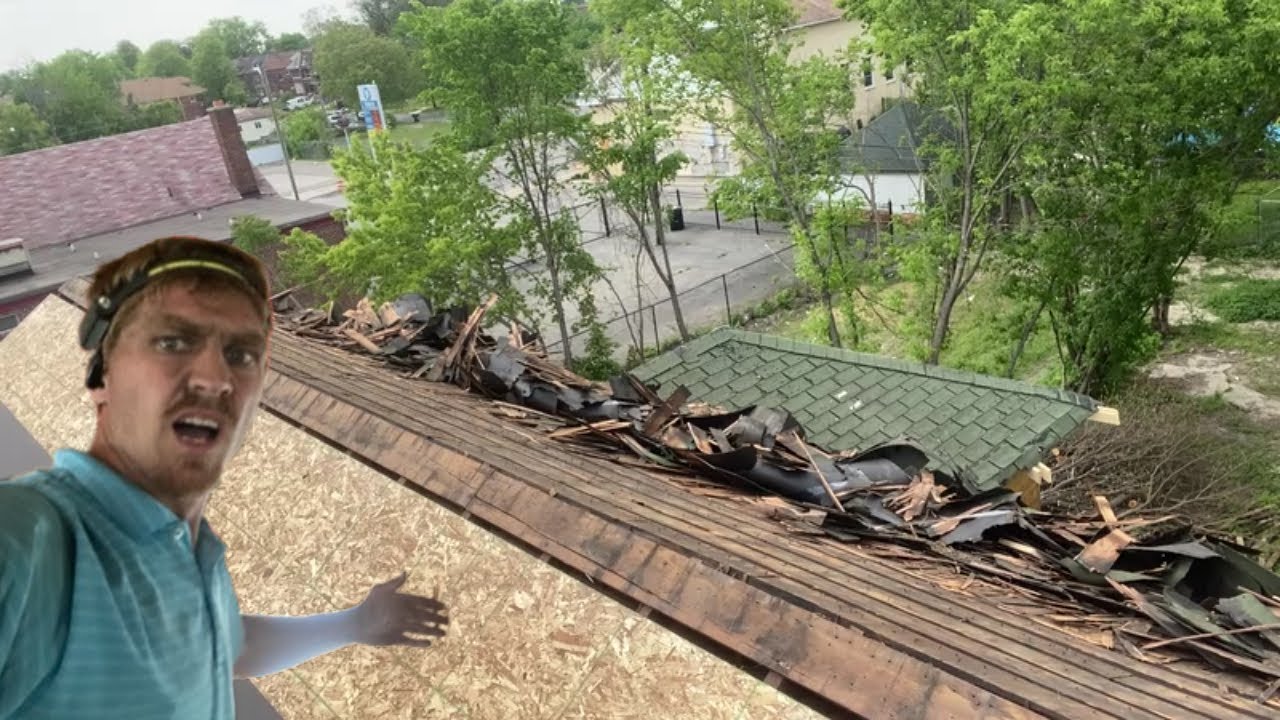
Second, fire damage is its own category. Fire Damage Roof Replacement may be appropriate because the roof materials and underlying components may not perform as they did before, even if the roof looks repairable at first glance. Post-event evaluation matters because it can reveal whether repair is truly feasible or whether replacement is the safer route.
Third, low-slope and flat roof assemblies behave differently. If you are dealing with Flat Roof Installation and Repair or Flat Roof Replacement, the water movement and drainage details matter intensely. In these systems, seam and membrane performance are often the real story, not the appearance from across the property line.
What I look for during the walkaround
Even without getting overly technical, the walkaround reveals a lot. I pay attention to whether the same categories of problems keep repeating in different areas. If multiple penetrations show similar issues, it suggests a broader system weakness. If the damage is concentrated around one area and the rest looks consistent, repair starts to feel more reasonable.
I also watch how the contractor talks through the findings. The better ones do not just point at the leak. They connect it to the roof’s assembly and explain what has to change to prevent recurrence. That is the difference between someone selling a repair plan and someone doing Roof Inspection with decision support.
If the recommendation is Roof Replacement, I want to hear clarity about what will be removed, what will be replaced, and which components like flashings and ridge caps are part of the fix. If the recommendation is Roof Repair, I want to understand why the contractor is confident the rest of the roof is not likely to fail soon.
Repair and replacement are both “right” sometimes
One of the most frustrating parts of dealing with older roofs is that both options can feel uncomfortable. Repair feels temporary, replacement feels expensive. The key is to make the decision based on the roof’s condition and the pattern of damage, not on anxiety or habit.
The general guidance stays consistent across residential and commercial: small isolated problems often support Roof Repair, while older roofs with widespread damage, recurring leaks, or multiple trouble spots may justify Roof Replacement. When emergencies happen, you contain water first, then evaluate. After hazards like wind, hail, ice, snow, or fire, IBHS emphasizes post-event evaluation because feasibility can change with what the roof endured.
If you are considering Emergency Roof Repair, Residential Roof Installation, Commercial Roof Installation, or any form of Commercial Roof Repair or Commercial Roof Replacement, the best next step is still the same: schedule a Roof Inspection with a contractor who can explain the evidence behind their recommendation.
Older roofs are never perfectly predictable. But with the right inspection and a clear decision framework, you can make choices that feel less like guesswork and more like professional risk management.